The next step was Turkey.
I was on a flight to Ankara, the capital, and from there I was picked up by one of the team managers. Not the actual football manager, more the kind of guy who organised everything around the team.
The drive told me a lot, very quickly. We were flying down the motorway at close to one hundred miles an hour. He had a cigarette in one hand, the steering wheel in the other, and seemed completely relaxed about both. Every few minutes, another cigarette.
I just sat there.Three hours later, we arrived at the training base in the mountains. It was up there to escape the Turkish summer heat.
It didn’t really feel like it.
It was still close to thirty degrees when I arrived, not exactly the kind of conditions I had been used to training in in Scotland.
There was no time to settle in.
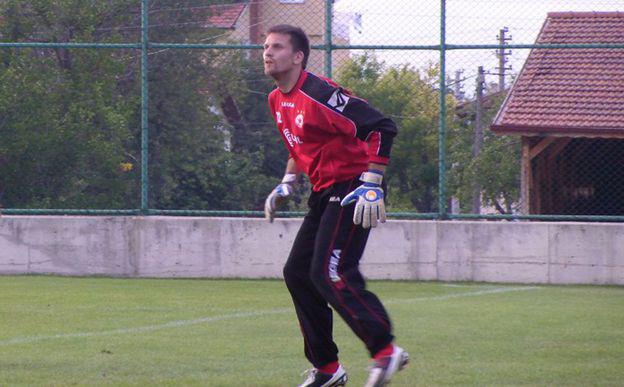
I got changed quickly and went straight out to join the team for my first training session.
That was my introduction.
I was sharing a room with Cillian Sheridan, a player I already knew from Scotland. He had come through at Celtic, and I had played against him when he was at Motherwell and I was at Hamilton.
He was a great guy. Very funny. But the first few things he said to me were not exactly reassuring. “Don’t expect to be paid,” he said. “The contract means nothing here.”
He said it half joking, but not really.
It didn’t fill me with confidence.
The move that had felt so exciting and so full of opportunity just a few days earlier suddenly felt a little different.
More on that later.
The next day, I properly met my new goalkeeping coach.
He was intense.
Completely different to what I had been used to.
His English was limited, my Bulgarian was non-existent, but he had one phrase he used all the time:
“You are my soldier, my friend.”
And he meant it.
His view was simple. I had missed a lot of training because of my shoulder injury, so now I needed to catch up.
His solution was also simple.
Four training sessions a day.
While the rest of the team had two, I had four. Hard, physical work, often wearing a 15 kg weighted vest.
It felt like being trained for something completely different.
After three days, I could barely move.
The camp was tough.
I was sore, tired and in pain most days, but slowly I adjusted. That is what football teaches you. Sometimes there is no big solution. You just keep going until your body catches up with what is being asked of it.
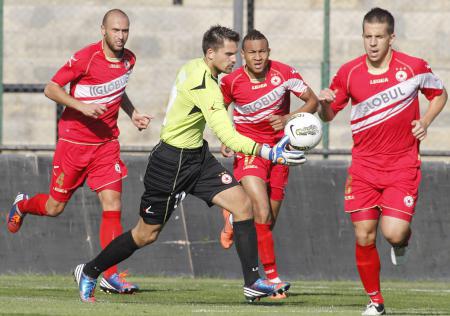
During that camp, I played my first games for CSKA. One of them, from memory, was against a Russian team, UFA, and another was against a Turkish team whose name I cannot remember now. They were only friendlies, but for me they mattered. New club, new teammates, new expectations. Every action felt like a small test.
Eventually, the grind of the camp came to an end and we headed back to Sofia.
We even got a day off after returning, which gave me my first proper chance to walk around and see the city.
And I liked it.
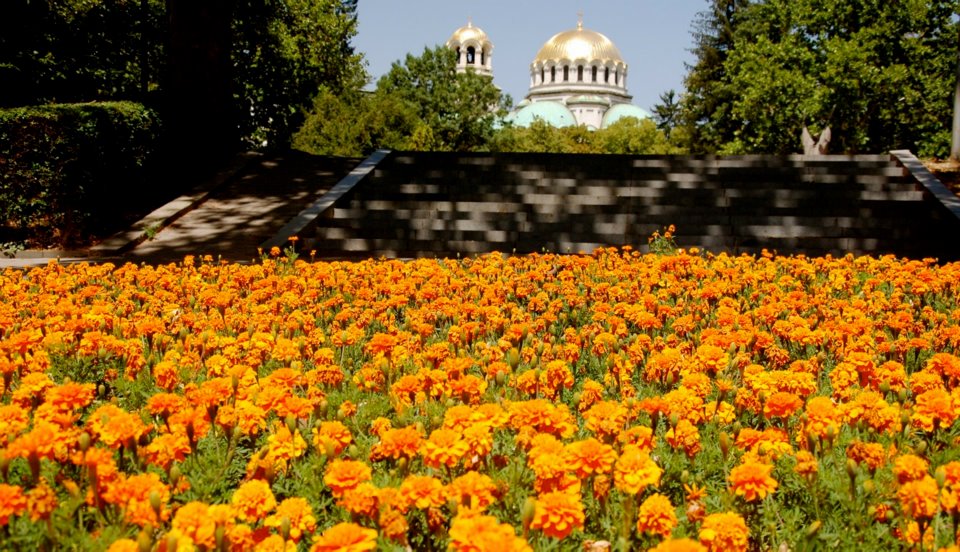
There was Borisova Gradina, the big green park near the stadium. There was the impressive Alexander Nevsky Cathedral, standing proudly in the city centre. There was the statue of St Sofia, and Vitosha Boulevard, full of restaurants, cafés and cocktail bars.
It was only a quick look, but it gave me a different feeling.
After the heat, the pain, the driving, the warnings, the four sessions a day and the 15 kg vest, Sofia suddenly felt a little more welcoming.
But there was no time to settle.
Next stop was Europe.

 Tomas Cerny - Behind the Gloves
Leave a reply to Sofia (Part 2) Arrival in Sofia – Tomas Cerny – Behind the Gloves Cancel reply