What I saw, what I heard, and why Scotland always felt different.
After the PAOK game in Heraklion, I thought a lot about the strange things that happen around football.
Not the football itself.
The football is simple.
You train. You prepare. You go out. You compete. You win, lose or draw.
That is the part I always loved.
But around the game, there can be another world. A world of owners, agents, promises, envelopes, unpaid wages, bonuses, rumours, pressure, influence and people who are not always visible from the stands.
I experienced different versions of that world in different countries.
Some of it was direct. Some of it was only something I heard. Some of it was never completely clear. And that is why I call them grey areas.
Because football is not always black and white.
Sometimes you know something is wrong.
Sometimes you only feel it.
Sometimes you hear something afterwards and suddenly a few things start to make sense.
And sometimes you are just a young player, trying to build a career, and you do not really know what to do with what you have seen.
Growing Up Around Rumours
Corruption in football was something I was aware of from a young age.
Not because I was involved in it. I was not.
But because people talked about it.
I would be watching local amateur football and you would hear comments from people standing around the pitch.
“They paid the referee.”
“They gave the other team a keg of beer.”
“They need the points to stay up.”
“The other team is already safe.”
It was said almost casually, like it was just part of football.
As a boy, I did not think too deeply about it. I loved football too much. I loved training. I loved diving around in goal. I loved being part of a team. I wanted to play, improve, and see how far I could go.
All that other stuff felt like background noise.
Something adults talked about.
Something that happened somewhere else.
Until it didn’t.
Kladno, Age 17
The first time it touched me directly, I was 17.
I was playing for Sigma B in the Czech second tier, which was already a fully professional league. We were away at Kladno.
Before I went out for my warm-up, someone from the other club managed to get me on my own in the tunnel.
He said they had 20,000 Czech crowns for me if I let in a goal.
I remember being completely shocked.
I do not think I even answered. I just walked away and went out to warm up.
I would like to say it did not affect me, but it did.
I was 17. I was still a boy, really. I was trying to make a career in football. I was trying to do the right thing. Suddenly, instead of thinking only about the warm-up, the pitch, the opposition, my positioning, my first touch, this thing was in my head.
I had never experienced anything like it.
We lost 1–0.
I felt I could have done better with the goal.
And I never spoke about it.
Maybe I was embarrassed. Maybe I did not know who to tell. Maybe I just wanted to move on and pretend it had not happened.
But it stayed with me.
Not because I accepted anything. I did not.
But because someone had tried to put that thought in my head before a professional football match.
That is a horrible thing to do to a young player.
Bulgaria and “Motivation”
Years later, in Bulgaria, I saw another side of it.
People called it “motivation”.
That word was used a lot.
It did not always mean corruption in the obvious sense. It was not always someone being paid to lose. Sometimes it was the opposite. A team might be offered money to win or draw because the result helped another club.
In some places, that was treated almost like part of the game.
But it still felt strange.
At CSKA Sofia, we were often owed money. Wages were late. Bonuses were late. You were never completely sure when you would actually be paid.
Before my first Eternal Derby against Levski, the owner came to our hotel and promised us a bonus if we won.
We won 1–0.
After home games, I would normally jump in a taxi and go home. But this time we were told to get on the team bus and go back to the hotel. When we arrived, we were called one by one into one of the rooms.
Inside, we were given an envelope.
Mine had 6,000 leva in it, around €3,000.
At the time, I was happy. We had won the Eternal Derby. I had kept a clean sheet. And for the first time at CSKA, I had actually received a proper bonus.

But only a few weeks later, I was told that the money may not have come from CSKA at all.
I was told it may have come from Ludogorets Razgrad, because they were at the top of the league and Levski dropping points helped them.
I cannot prove where that money came from.
I can only say what I was told afterwards, and how it made me feel when I heard it.
At the time, you are a player. You win a derby. You get paid a bonus. You do not ask too many questions.
But later, when you look back, you realise again that sometimes you are not only playing your own game.
You are part of a bigger game around the game.
And that is not a comfortable feeling.
Greece
Then there was Greece.
The PAOK game at the Pankritio Stadium was probably the clearest example for me of a match that did not feel right while I was actually playing in it.
We were not being paid. Then suddenly, before one particular game, there was a huge bonus promised if we took points from PAOK. During the match, I had a strong feeling that many decisions were helping us. Soft fouls. Strange interruptions. Moments where PAOK seemed to be building pressure and the game suddenly stopped.
I could not prove anything during the game.
I was in goal. I had a job to do.
But afterwards, when the man who had promised the bonus came into the changing room furious and shouted that he had done everything, including paying the referee, it made the whole experience feel dirty.
I had not done anything wrong.
But I still felt embarrassed.
I felt used.
And I think that is one of the worst feelings in football.
You give your body, your concentration, your pride, your name to a match. Then afterwards you wonder whether the match itself was as honest as you were.
Scotland Felt Different
That is why I also want to say this clearly.
I never felt that way in Scotland.
I played hundreds of games in Scotland, around 260 official appearances for Scottish clubs, across Hamilton, Partick Thistle, Hibernian and Aberdeen.
And during all that time, I was never aware of anything untoward going on behind the scenes.
That does not mean every refereeing decision was good.
Far from it.
I saw plenty of strange decisions. I conceded goals where I thought there had been a foul. I saw penalties given that looked soft. I saw penalties not given that looked obvious. I saw big moments go for bigger clubs, and sometimes you wondered whether the pressure of the stadium, the crowd, the badge, or the consequences of the decision had affected the referee.
But that is different.
That is human error.
That is pressure.
That is football.
In Scotland, the game always felt clean to me.
It felt like 11 v 11 on the pitch.
You might be angry with the referee. You might shout. You might think he had a terrible game. You might watch it back and still think he got it wrong.
But I never came off the pitch thinking there was something else behind it.
And after some of the things I had experienced elsewhere, that mattered to me.
The Strange Bonus Against Rangers
There was only one story in Scotland that felt a little strange to me.
But even this was not about corruption.
It was more about football business.
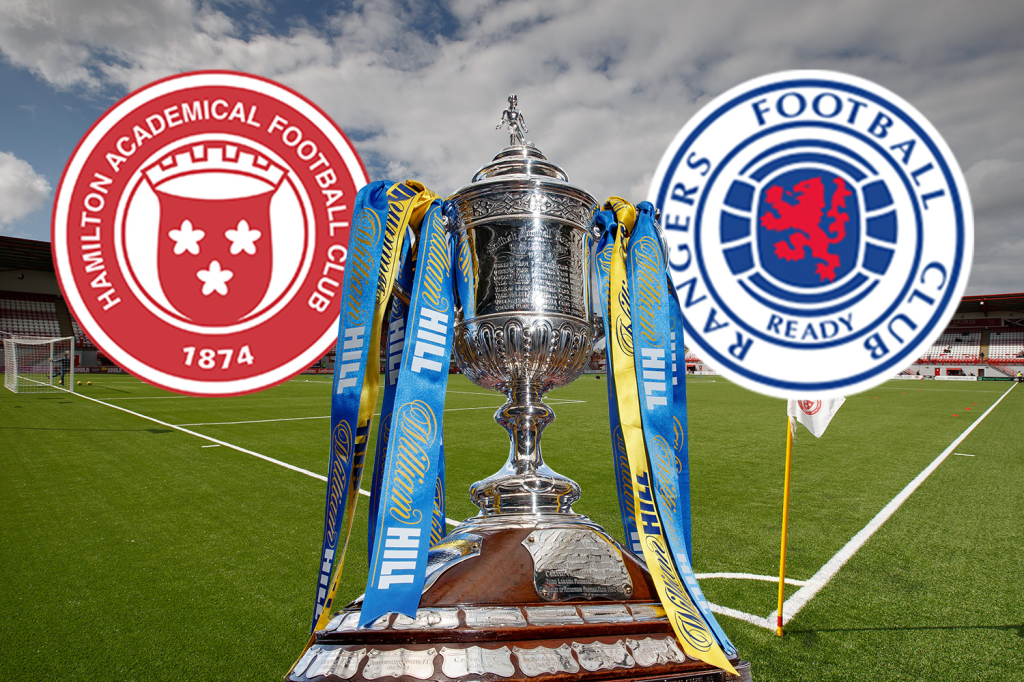
When I was at Hamilton, we played Rangers at home in the Scottish Cup. It was January 2010, in the fourth round.
Before the game, we were told about the bonus scheme.
If we beat Rangers, we would get £1,500.
If we drew, we would get £2,500.
That did not make sense to me.
Normally, a win bonus is bigger than a draw bonus. That is how football works. You win, you get more. You draw, you get less. You lose, you get nothing.
But here it was the other way around.
The only explanation I could think of was that a draw meant a replay at Ibrox. And a replay at Ibrox meant extra money for the club — gate receipts, maybe television money, a big night at a stadium with a huge capacity.
Again, I am not saying there was anything wrong with it.
It was just strange.
And as fate would have it, the game became one of the craziest matches I played in Scotland.
Rangers went 2–0 up. It looked like the normal script. Big club comes away from home, scores early, controls the game, moves into the next round.
But we came back.
Simon Mensing scored a penalty. Marco Paixao equalised. Then Mickaël Antoine-Curier scored before half-time to put us 3–2 up. We were on the edge of a huge cup shock.
Then, in the second half, Rangers got a penalty.
Kenny Miller scored in the 63rd minute.
3–3.
The replay was on.
I remember the feeling after the game. Part of you is disappointed because you were so close to knocking Rangers out. Another part of you knows you have earned a replay at Ibrox.
And, strangely, the draw meant a bigger bonus than if we had won.
Football can be a funny business.
Ibrox
The replay at Ibrox was one of my best games.
Rangers put us under huge pressure. I remember facing shot after shot, cross after cross, and feeling completely locked into the game. Sometimes as a goalkeeper, you get into that rhythm where you are not thinking too much. You are just reacting, moving, saving, organising, getting up again.
Sky later wrote that I had been “the star of the show”, keeping Rangers out until extra time.
After 90 minutes, it was still 0–0.
We had taken Rangers to extra time at Ibrox.
But then Steven Whittaker scored twice in quick succession, in the 98th and 99th minutes, and we lost 2–0 after extra time.
We were out.
Rangers went through.
And we still received the bigger bonus than we would have received for beating them in the first game.
That still makes me smile a little bit.
Not because it was wrong.
Just because football can be strange.
In Greece or Bulgaria, strange often made me uncomfortable.
In Scotland, strange usually just meant football being football.
And there is a big difference.
What Stayed With Me
What stayed with me from all of this is that not every grey area is the same.
There is a difference between a bad refereeing decision and a dishonest game.
There is a difference between pressure and corruption.
There is a difference between a strange bonus scheme and someone trying to influence what happens on the pitch.
As a player, you learn to feel those differences.
You may not always be able to explain them perfectly, but you feel them.
In Scotland, even when decisions went against me, even when I was furious, even when I thought a referee had made a terrible mistake, I still believed in the game.
That matters.
Because when you have played in places where things do not always feel clean, you appreciate it more.
You appreciate walking onto a pitch and believing that what happens next will be decided by the players.
By mistakes.
By quality.
By courage.
By luck.
By pressure.
By football.
Not by something else.
Lesson for Goalkeepers
As a goalkeeper, you have to protect your concentration and your standards.
There will always be noise around football. Referees, crowds, owners, agents, money, bonuses, pressure, rumours, and decisions you do not understand.
Some of it is part of the game.
Some of it is not.
You have to learn the difference without letting it take away the reason you started playing in the first place.
You started because you loved the ball, the saves, the team, the challenge, and the feeling of competing honestly.
Hold on to that.
Football can still be beautiful.
But only when the game still feels like a game.
What I’d Want My Children to Learn
Not everything in life will be fair.
Sometimes people will make mistakes. Sometimes decisions will go against you. Sometimes people in power will get things wrong.
That does not always mean something bad is happening. Sometimes it is just pressure, human error, or life being messy.
But if something really does not feel right, listen to that feeling.
You do not need to be dramatic. You do not need to accuse everyone. You do not need to think the worst straight away.
But stay aware.
Stay honest.
And never let anyone pull you into something that goes against who you are.
Your name matters.
Your character matters.
And when something is finished, whether it is a game, a job, a friendship, or a difficult chapter in life, you should be able to look at yourself and know that you did things properly.


Leave a Reply