
One of those Sofia stories that sounds unbelievable now, but at the time felt like part of normal life.
By late September, I had been in Sofia for about three months.
I was settled at the club. I had played every game. I was starting to understand the rhythm of the place, the city, the club, the people, and the strange energy that came with living there.
Laura had moved over from Scotland by then too, which made a huge difference. She had travelled across Europe with her dad, in the car and by boat, through France, Belgium, Italy and Greece, all so she could bring Odie, our sausage dog, with her.
That was Laura.
Supportive, determined, practical — and absolutely not leaving the dog behind.
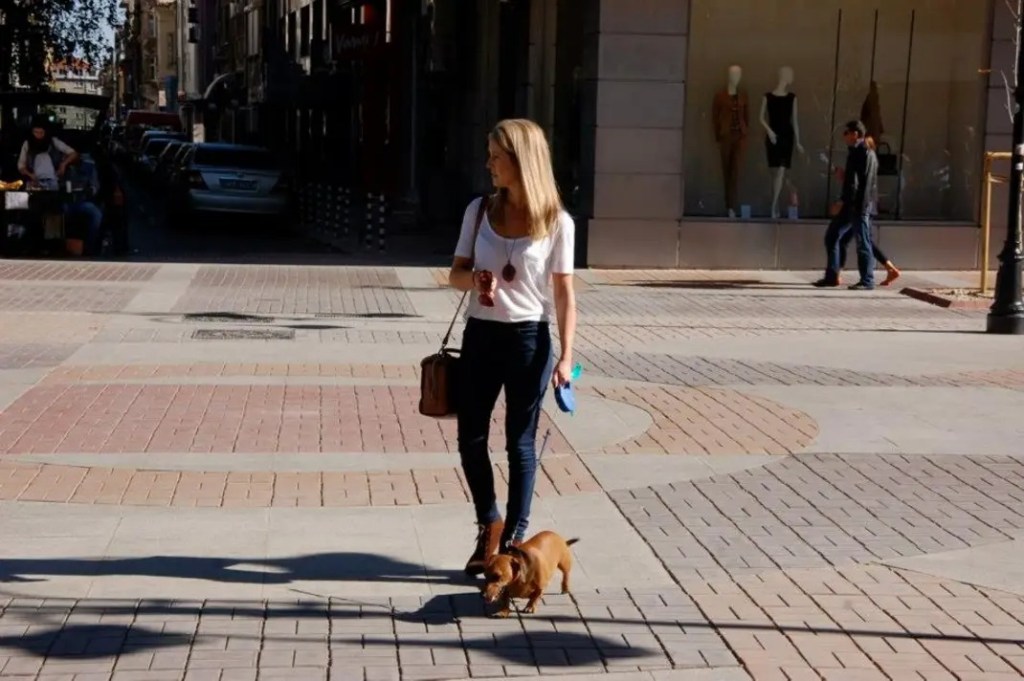
We were beginning to find our feet. Sofia was new and different, but we were starting to enjoy it. A new country. A new city. A different way of life. There were good people around us, nice places to go, and moments where it felt like the move might really work out.
There was only one problem.
I had not been paid.
And neither had most of my teammates.
By that point, we had gone from the start of the season into late September without receiving our wages. In football, people sometimes imagine that players are always protected, always comfortable, always looked after. But it does not always work like that. Especially when you move abroad. Especially when you sign for a club where things are not quite as organised behind the scenes as they might look from the outside.
Our changing room was full of players from everywhere. France, Belgium, Romania, Serbia, Greece, Argentina, Brazil, Portugal, Cape Verde, Togo, Cameroon, Madagascar — and many more. I think we had around seventeen different nationalities in the squad.
Everyone had their own reason for being there.
Some players had come to CSKA to advance their careers. Some had come for the challenge. Some had come because it was a huge club with big history. Some had come because the money was better than what they had been offered elsewhere.
But the problem was simple.
The money was not coming.
At first, you try not to panic. You tell yourself it will be sorted. You listen to people at the club. You trust that maybe it is just a delay, just a small issue, just one of those things.
But after a while, the atmosphere changes.
Players start talking differently. Conversations become quieter. People start asking questions. Some players contact lawyers. Some explore options to leave. You start wondering how serious the situation really is.
I was in regular contact with my agent. I also contacted PFA Scotland, because I was still a member, just to get advice and understand where I stood.
Every time we asked the club when we would be paid, the answer was the same.
“Next week.”
In Bulgarian:
Следващата седмица.
Sledvashtata sedmitsa.
I heard that phrase a lot.
At first, it sounded reassuring.
After a while, it started to mean nothing.
It was unsettling. I had moved to Sofia with Laura. We were building a life there. I was playing every week. I was doing my job. But I was also starting to seriously wonder whether I might have to leave.
Then, one afternoon in late September, the phone rang.
I was at home after training, relaxing in the flat. It was still very warm outside, close to thirty degrees, with that heavy early-afternoon sun that Sofia could have even after summer had officially finished.
It was the team manager.
“You must come to the stadium immediately,” he said.
Then he added something that got my attention.
“You might get paid.”
He did not say much else.
So I quickly got changed. Shorts, T-shirt, nothing special. I was not thinking about anything dramatic. I just knew there was a chance I might finally receive some money, and by that point I needed it.
I left the flat and walked to G. M. Dimitrov metro station. From there, it was only a few stops to Vasil Levski National Stadium. Then a short walk through Borisova Gradina park towards the CSKA stadium.
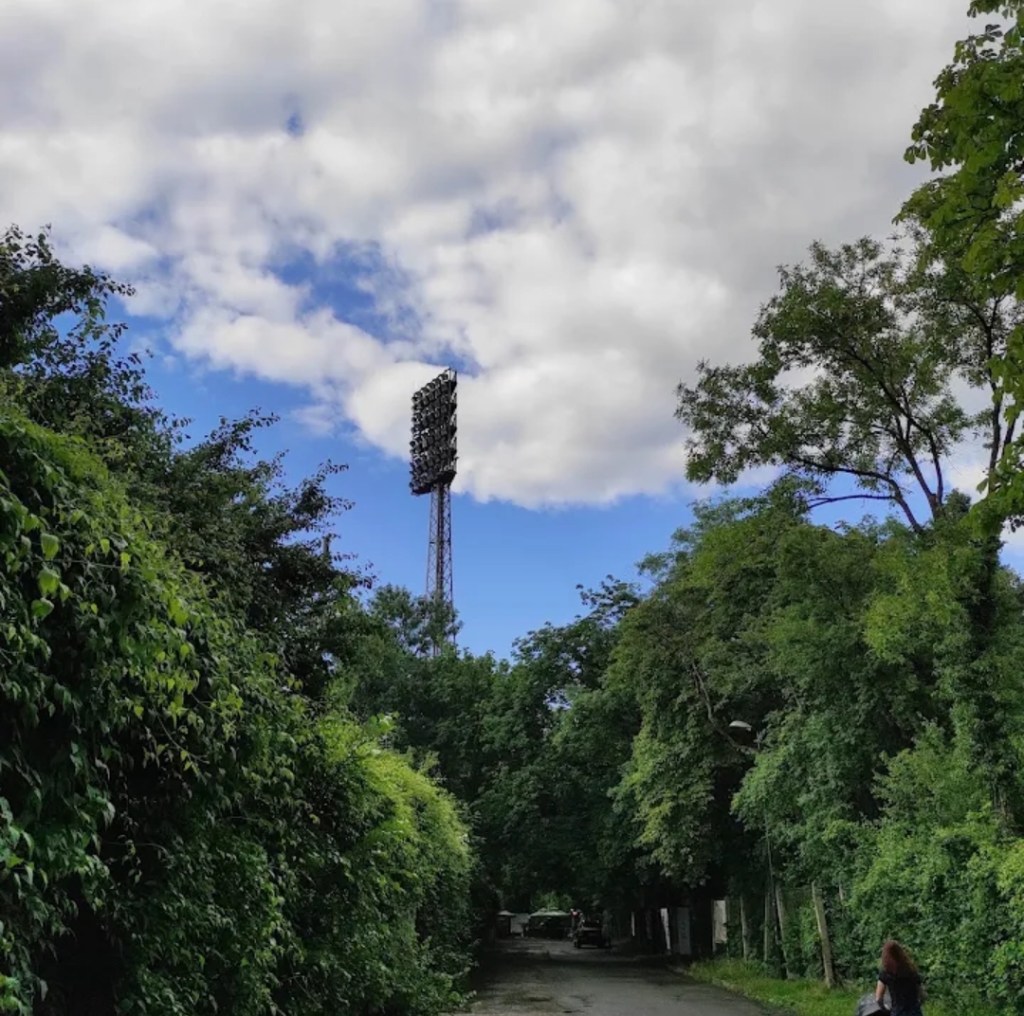
I had made that journey plenty of times by then.
But this time was different.
When I arrived at the stadium, I got my first surprise.
There was a man standing at the front door with a handgun by his side.
He was calm. Not aggressive. Just there.
He invited me in and told me to go upstairs.
I remember thinking: Right. This is different.
On the first floor, there was another man with a gun. He pointed me towards a door and told me to go through.
Inside, three of my teammates were sitting on a bench, waiting.
Nobody was making a joke. Nobody was asking too many questions. We all understood the situation without needing to say much.
Soon, it was my turn.
I walked into the office.
What I saw inside was not what I expected.
There was a little old lady standing behind a counter. Behind her were bags of cash. Beside her was one of those money-counting machines you see in banks.
It was a strange scene.
Outside the room, men with guns.
Inside the room, an old lady counting banknotes.
This was football in Sofia.
She gave me a small slip of paper to sign. It was all in Bulgarian, written in Cyrillic alphabet. I had no idea what it said.
But I was not going to refuse to sign it.
First of all, I needed the money. I had not been paid for three months.
Second, I did remember the men with guns outside the door.
So I signed.
The lady started feeding notes through the counting machine. The sound of it filled the room. Stack after stack. All in Bulgarian leva. Mostly ten leva notes.
Eventually, she handed me 25,000 leva.
That was one month’s salary.
I was owed three.
But I did not argue.
I took the money, looked at her, and said:
“Благодаря.”
Blagodarya.
Thank you.
Then I walked out.
And only then did I realise I had another problem.
I was standing in Sofia in shorts and a T-shirt, holding a sizeable amount of cash in my hands.
No bag. No jacket. No pockets big enough. No plan.
I knew enough by then to realise that 25,000 leva was a huge amount of money in Bulgaria at the time — close to three years of the average wage. That made me feel very privileged, and also very uncomfortable, walking through Sofia with that much cash.
I did not fancy walking through the city or taking the metro while openly carrying all that cash.
So I did the only thing I could think of.
I stuffed it down my underwear.
Not my proudest moment, but probably one of my more practical ones.
Then I walked back through the park, got on the metro, and made my way home.
When I got back to the flat, I put the cash in a drawer under the TV.
That was it.
My first proper CSKA wage payment.
No bank transfer. No payslip I could properly understand. No email confirmation.
Just a phone call, a metro journey, two men with guns, a little old lady, a money-counting machine, and 25,000 leva hidden in my shorts on the way home.
The strange thing is that after that, it did not even feel completely shocking anymore.
That became a fairly normal way of getting paid in my first season.
Irregularly.
In cash.
Eventually, I opened a Bulgarian bank account and became better prepared. The next time, I took a backpack with me. After collecting the money, I went straight to the bank with my contract, ready to explain where it had come from.
Because that was another thing you learned quickly.
In Sofia, you had to adapt.
You had to be ready for situations you would never have imagined before you arrived. You had to stay calm when things felt strange. You had to work out when to ask questions and when not to. You had to learn that football, in some places, was connected to a world much bigger and more complicated than the game itself.
And yet, somehow, life carried on.
We trained. We played. We travelled. We tried to win games. The supporters still expected performances. The club still carried the weight of its history. And as players, we still had to walk out onto the pitch and do our jobs.
That was one of the strangest parts of it all.
No matter what was happening behind the scenes, once the whistle went, you were still a goalkeeper.
You still had to catch the cross.
You still had to organise the defence.
You still had to make the save.
You still had to stay calm.
Even if your wages had just been handed to you in a bag of cash by an old lady, guarded by men with guns.
What Stayed With Me
When I look back now, I can smile at parts of the story.
The shorts. The T-shirt. The money hidden in my underwear. The little old lady with the counting machine.
But underneath the humour, there was something more serious.
It reminded me how vulnerable footballers can be when they move abroad. People often think players have all the power, but that is not always true. When you are in a different country, with a different language, different laws, different systems and a club that controls your contract, your registration and your wages, you can feel very small very quickly.
You can be playing every week in front of thousands of people and still feel uncertain about basic things.
Am I going to get paid?
Is the club telling the truth?
Can I trust what I am signing?
What happens if I speak up?
What happens if I leave?
Those are not questions supporters always see. But they are part of football too.
Lesson for Goalkeepers
Football can take you into amazing places, but it can also put you in situations that are confusing or uncomfortable. When that happens, stay calm. Ask advice from people you trust. Understand what you are signing, where your money is coming from, and what your options are. Talent is important, but it is not enough. You also need awareness, patience, and good people around you.
What I’d want my children to learn
Some opportunities in life can look exciting from the outside, but that does not always mean they are simple behind the scenes. Take your time. Ask questions. Listen to people you trust. Do not let pressure make you panic, and do not let strange situations change your values. Whatever room you walk into, remember who you are.
And sometimes, apparently, you need a backpack.


Leave a Reply