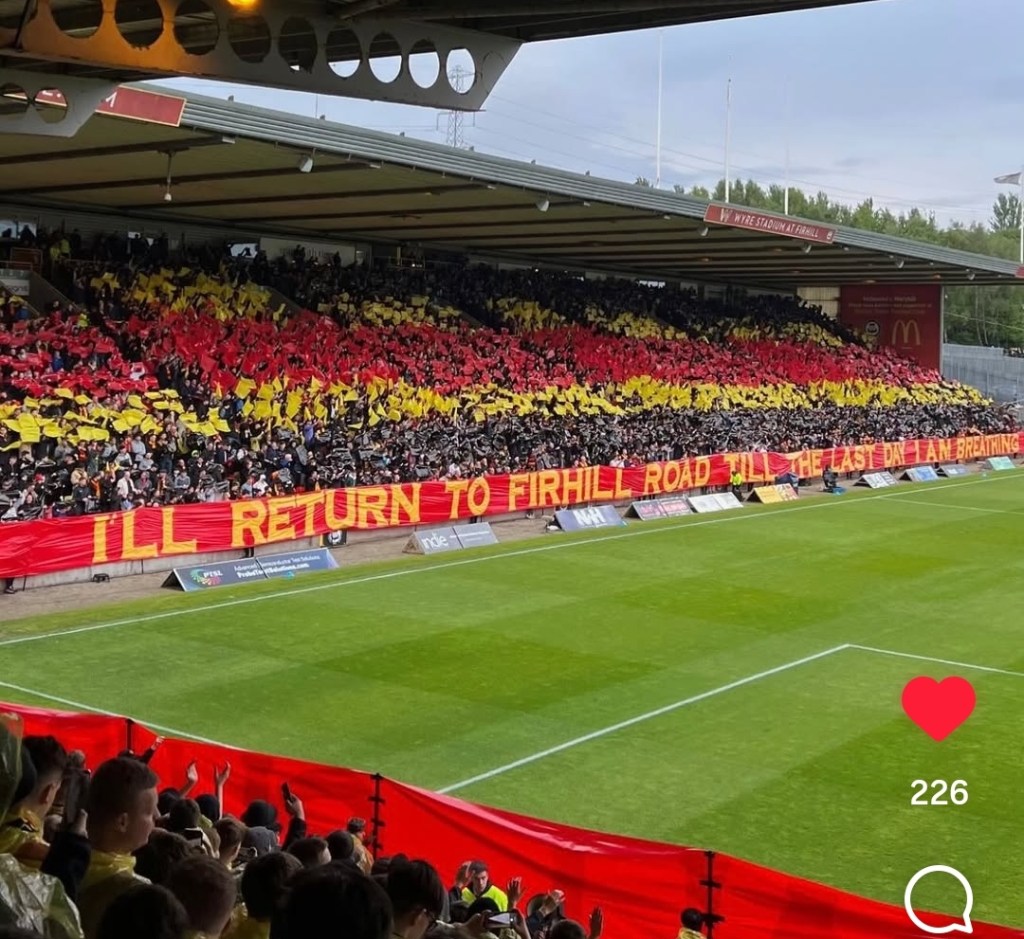
Firhill, Glasgow – football, family, pressure, and the people who made a club feel like home.
I am writing this story at a time when Partick Thistle are playing in the Premiership play-offs again.
I watched the game last night, and it brought so many feelings back.
Not just football feelings. Not just memories of games, saves, mistakes, pressure or results.
People.
That is what came back to me most.
And maybe that is why I wanted to write this story now.
Before I write about the big games, the highs and lows, the saves, the mistakes, the pressure, and the painful moments from my time at Partick Thistle, I feel like I need to write about the people first.
Because when I think about Partick Thistle, I do not only think about matches.
I think about faces around the club.
Staff. Volunteers. Supporters. People who had been there long before I arrived and would still be there long after I left. People who made the club feel personal. People who made it feel like a family.
Some of them are sadly no longer with us.
And that is probably why this feels important to me.
Football clubs are often judged from the outside by league tables, budgets, crowds, players, managers and results. That is understandable. Results matter. At a professional club, they always do.
But inside a football club, there is another world.
There are people who open doors in the morning. People who wash kit. People who make tea. People who know every corridor, every old photo, every story from years gone by. People who make sure the small things are done properly. People who ask how your family is. People who care about the club in a way that is not connected to contracts or careers.
At Partick Thistle, I felt that very strongly.
It was not the biggest club I played for. It was not the richest club. It did not have the biggest stadium or the biggest crowds.
But it had something very real.
It had people who cared deeply.
And that matters more than players sometimes realise.
When I joined Partick Thistle, I was focused on football. I had left Hibs at the end of my contract. Hibs had offered me a new deal, but I felt that if I stayed there, I would probably be number two. I had just turned thirty. I still felt strong. I still wanted to play every week at the highest level I could.
Then Alan Archibald called.
He asked how I felt about coming to Firhill.
Partick were in the Premiership. They wanted me as their number one goalkeeper. For me, the decision was simple. I wanted to play football. I wanted responsibility. I wanted to be trusted.
So I signed.
But what I did not know at the time was that Partick Thistle would become more than just another club in my career.
It would become a place that stayed with me.
Not because everything was easy. It definitely was not. There were difficult games. There were hard moments. There were mistakes, pressure, criticism, injuries, uncertainty, and eventually the pain of relegation.
But the people made it personal.
That is the thing I remember most.
I remember Macca, the kitman. Every football club has people like that, but not every club understands how important they are. Kitmen are not just there to put strips out and collect boots. They are part of the dressing room. They feel the mood of the place. They see players when they are relaxed, frustrated, nervous, angry, happy. They are there before most people arrive and after most people leave.
At Partick Thistle, Macca was part of the fabric of the club.
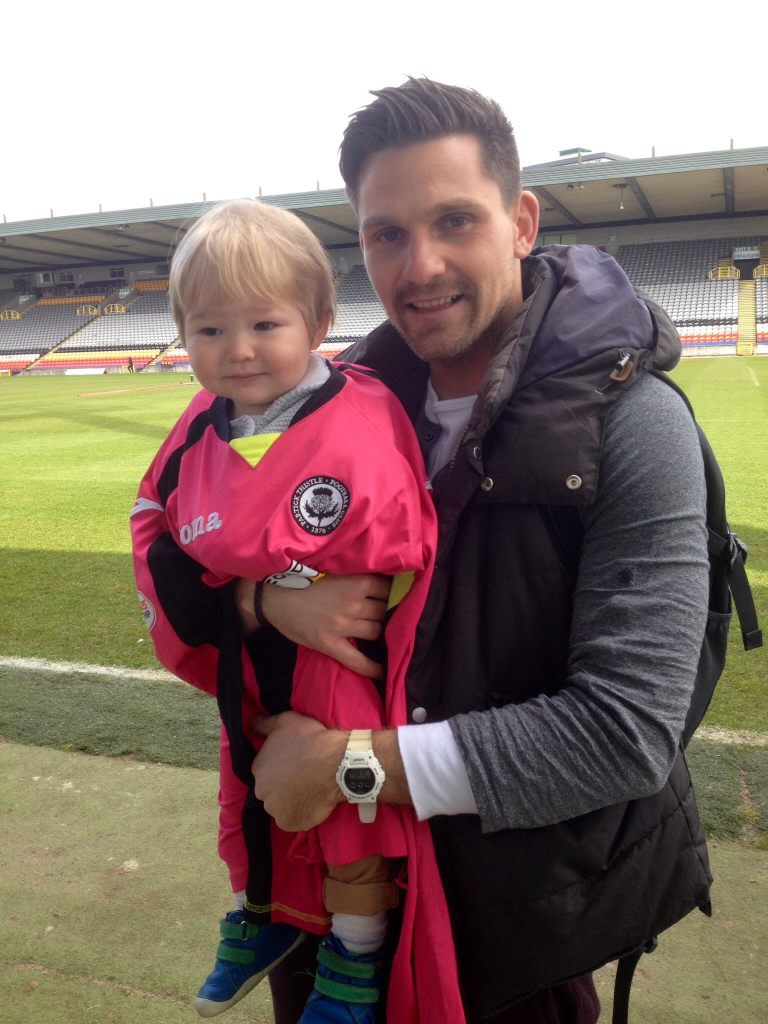
He was one of those people who made the place feel normal, even when football itself was not normal at all.
I remember Fiona as well.
People sometimes called her the tea lady, but that never really described what she meant to the club. Yes, she made tea. Yes, she looked after people. But her role was much more than that.
She was one of those people who made Firhill feel human.
She had warmth about her. She made people feel welcome. And for me, it became personal too. I went to Fiona’s house with Laura and the kids. We saw her horses and all her animals. I remember how welcome we felt. It was not forced. It was not official. It was just kindness.
Those moments matter.
When you move clubs, you often leave one football environment and enter another. But when people invite you into their life a little bit, when they make your family feel welcome, the club becomes more than a workplace.
It becomes personal.
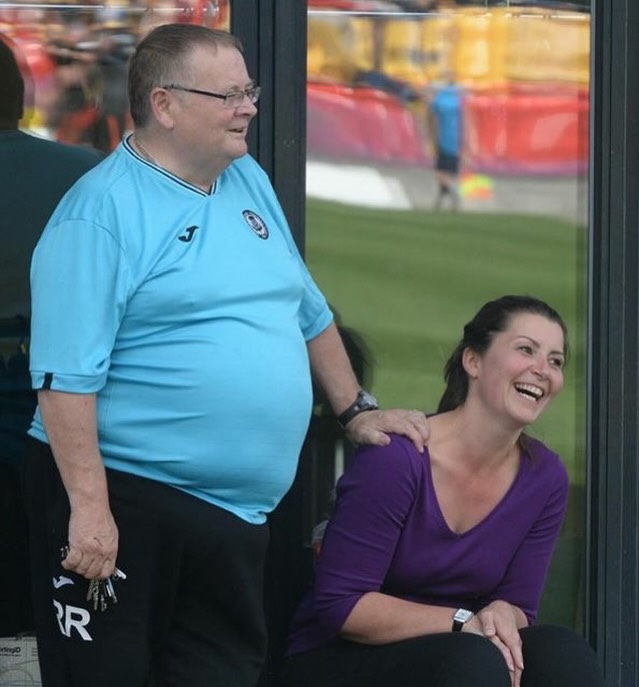
Then there was Ricky.
Ricky Roughan was one of those people who seemed to belong to the club completely. Not in a formal way. In a deeper way. When he passed away, the club spoke about him as someone who was far more than an employee. Alan Archibald described him as the heart and soul of the club, someone who brought life to the place and lifted people when they needed it.
That tells you everything.
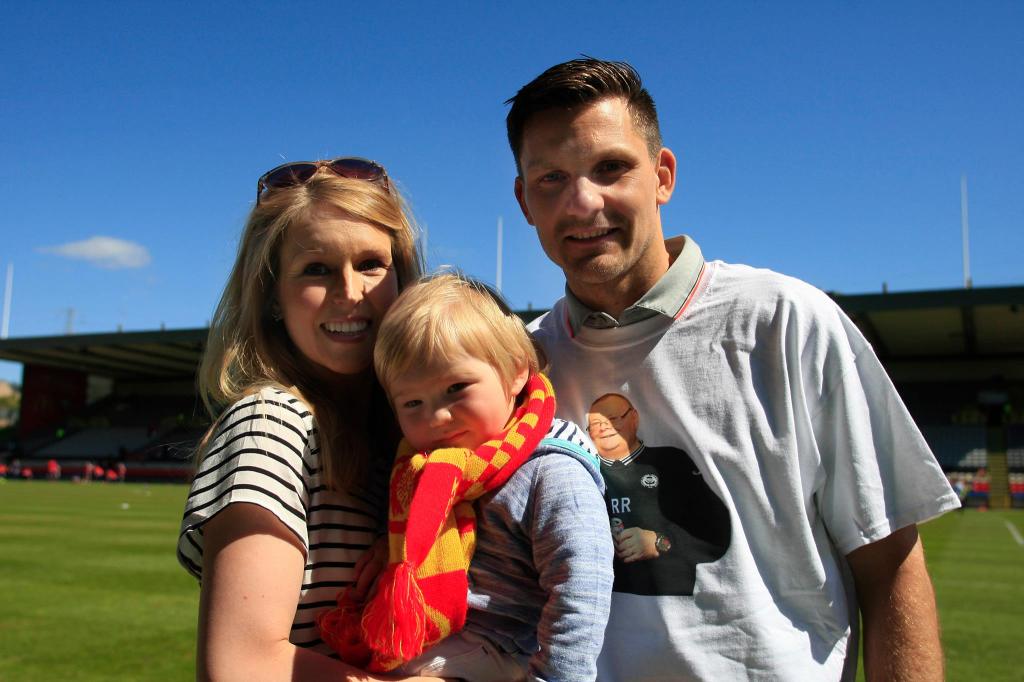
I remember wearing the T-shirt in Ricky’s memory.
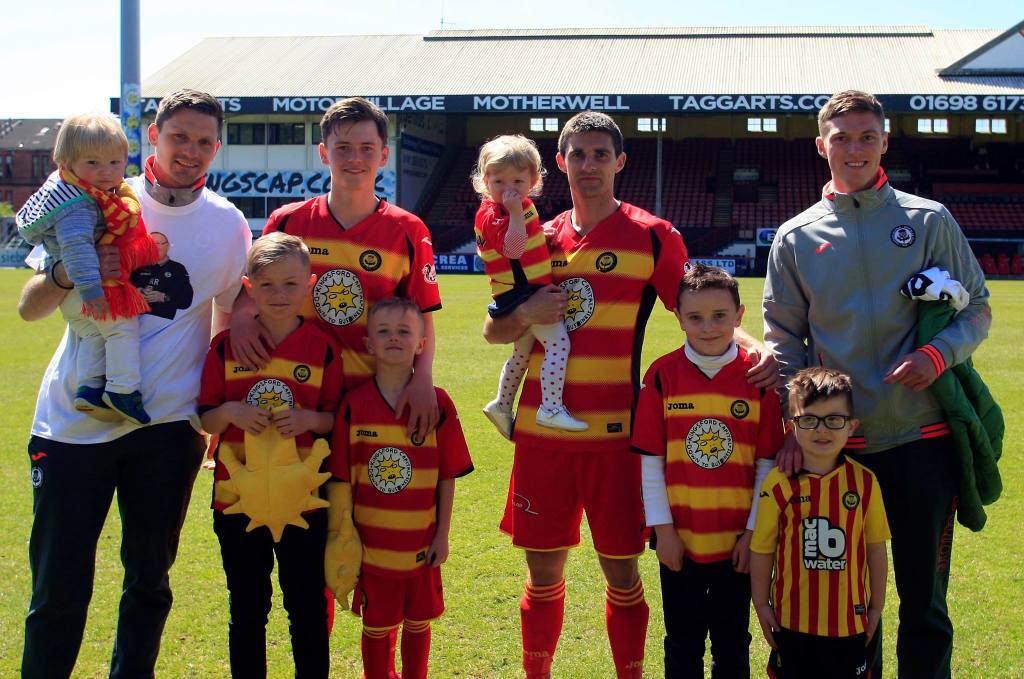
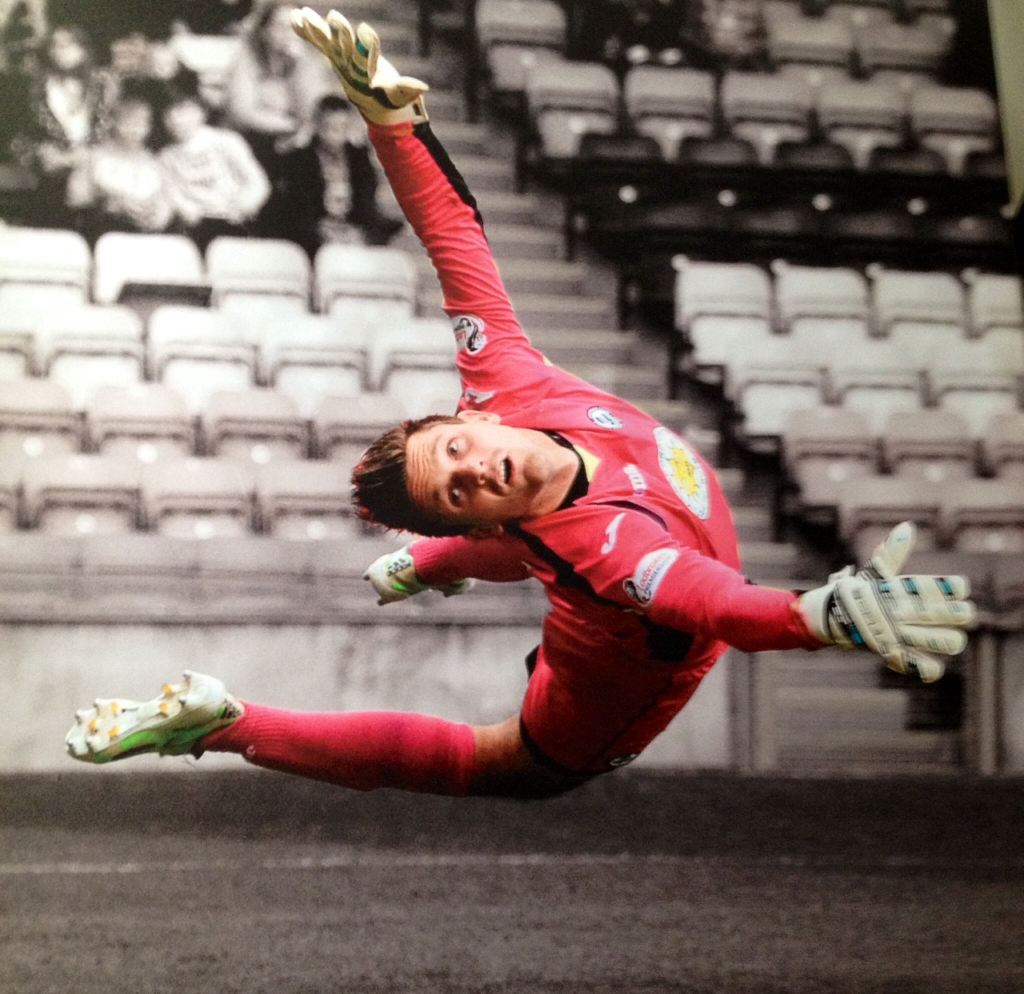
I also remember the photographers, Tommy Taylor and Donald Wilson, who seemed to capture not just the games, but moments around the club. Those photographs become part of the memory of a place. Photos I am sharing here are mainly theirs.
Football can move very quickly. One week you are preparing for a match, the next week everything has changed. Players come and go. Staff come and go. Seasons pass. But people like Ricky leave something behind.
Around the dressing room, around the club, around Firhill – those people become part of the memory of the place.
And then there was Robert Reid.
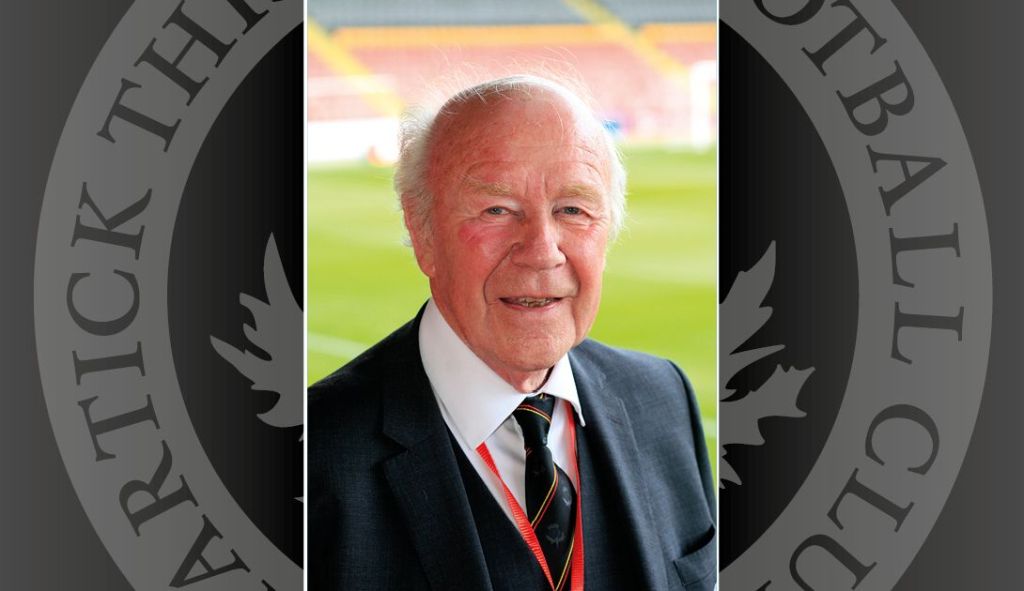
Robert was the club historian, but again, that title almost sounds too small for what he represented. He was also Honorary President and Associate Director, and he had supported Partick Thistle for well over 70 years. He had been programme editor, club secretary, Hall of Fame inductee, and one of those people whose contribution is almost impossible to measure properly.
He carried the history of the club with him.
I used to sit next to him on the bus to away games. We had some great chats. He knew so much. Not just dates and results, but stories. People. Moments. The kind of things that make a football club more than just a team on a Saturday afternoon.
I always enjoyed those conversations.
As a player, you are usually thinking about the next game. The next training session. The next result. The next contract. Football pushes you forward all the time.
But speaking with Robert reminded me that the club had a life long before me.
And it would have a life long after me.
That is important for a player to understand.
You are part of the story, but you are not the whole story.
I could mention many more people.
Players I shared the dressing room with. Coaches. Medical staff. Office staff. Volunteers. Supporters. People I still know by name. People who still message or speak to me when I see them. People who made Firhill feel like a real place, not just a football ground.
But I cannot name everyone.
And maybe that is the point.
It was not just one person.
It was the whole feeling of the place.
At some clubs, you can feel like you are just passing through.
At Partick Thistle, it was harder to feel like that.
You became part of something.
You noticed how much the club meant to people. Not in a dramatic way. In everyday ways. In how they spoke about it. In how they turned up. In how they cared. In how much a win changed the mood around the place. In how much a defeat hurt.
That is beautiful.
But it also brings pressure.
A different kind of pressure.
As a professional footballer, you learn to deal with pressure. You have to. Especially as a goalkeeper. Pressure is part of the job. You stand there knowing that one mistake can change a match. You learn to block things out. You learn to focus on the next action. You learn to keep your emotions under control.
I was usually quite good at that.
I had played in big games. I had played in derbies. I had played in stadiums with flares, noise, anger and chaos. I had played abroad where football sometimes felt completely unpredictable. I had been through uncertainty, injuries, contract problems, unpaid wages, mistakes and criticism.
So by the time I was at Partick Thistle, I was not inexperienced.
But the relegation play-offs against Livingston felt different.
And I think part of the reason was because of the people.
It was not just about staying in the league for myself. It was not just about my career, or the players, or the manager, or the table.
I knew what it meant to the people around the club.
I knew what it meant to Macca. To Fiona. To Ricky’s memory. To Robert. To the staff. To the supporters. To people who had followed the club for decades. To people who felt like family.
I knew what staying up meant to them.
And I knew what going down would feel like.
Usually, you try not to carry that onto the pitch. You cannot play a game for everyone. You cannot think about every consequence. You cannot stand in goal thinking about staff, supporters, jobs, history and the weight of the club. If you do that, the game becomes too heavy.
You need to keep it simple.
Ball. Position. Communication. Decision. Next action.
That is the goalkeeper’s world.
But in those games, I found it hard to separate everything.
I felt the weight of it.
I felt the club on my shoulders more than I probably should have.
And looking back now, with honesty, I think it probably affected me.
That is not an excuse. It is just the truth of how I remember it.
People sometimes think experience means you stop feeling pressure. It does not. Experience helps you understand pressure better. It gives you tools. It gives you perspective. But it does not make you a machine.
You still care.
And when you care deeply, pressure can find a way in.
The hardest thing about football is that you can give everything and still end up with pain. You can care. You can prepare. You can want it badly. You can know what it means. And still, the result can go against you.
That is football.
That is life as well.
Watching Partick Thistle in the play-offs again brought that feeling back.
I wish so much that they make it through.
Not just because I played there. Not just because I want the club to be in the Premiership.
But because I know what it means to people.
I know what it means to the people who work there. The people who volunteer. The people who travel. The people who have supported the club through good times and bad. The people who build their week around it. The people who carry Firhill in their heart.
That is why football matters.
When I look back at Partick Thistle, of course I remember the disappointment. I remember the difficult ending. I remember the feeling after the Livingston play-off. I remember knowing that we had not managed to do what everyone wanted us to do.
But I do not want that to be the only memory.
Because it would not be fair.
My time at Partick Thistle was much bigger than one result or one ending.
It was walking into Firhill and seeing people who made the place feel alive.
It was the humour around the club.
It was the small conversations.
It was Macca and the kit room.
It was Fiona and the warmth she gave to people.
It was Ricky and the memory of someone who meant so much to the club.
It was Robert Reid on the away bus, telling stories and carrying the history of Partick Thistle with him.
It was the supporters, who could be funny, sharp, loyal, demanding and warm, sometimes all at the same time.
It was Glasgow.
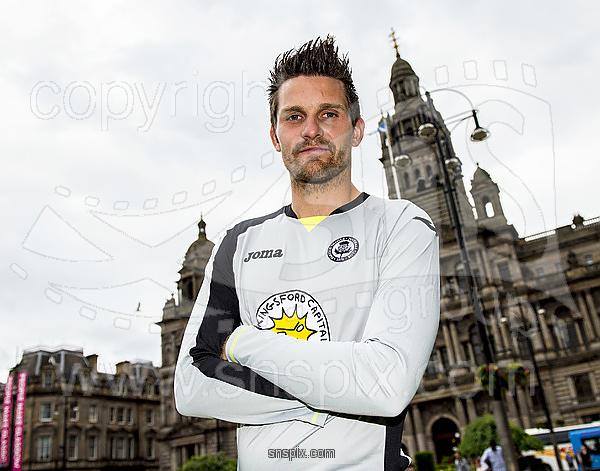
It was Firhill.
It was that feeling that football is not only about what happens between the first whistle and the last whistle.
Sometimes, football is about belonging.
And maybe that is why Partick Thistle stayed with me.
Because I belonged there for a while.
Not forever as a player. Football does not usually allow that. Contracts end. Managers change. Teams move on. Careers move quickly. You think you have time, and then suddenly that chapter is over.
But some places stay with you.
Firhill is one of those places for me.
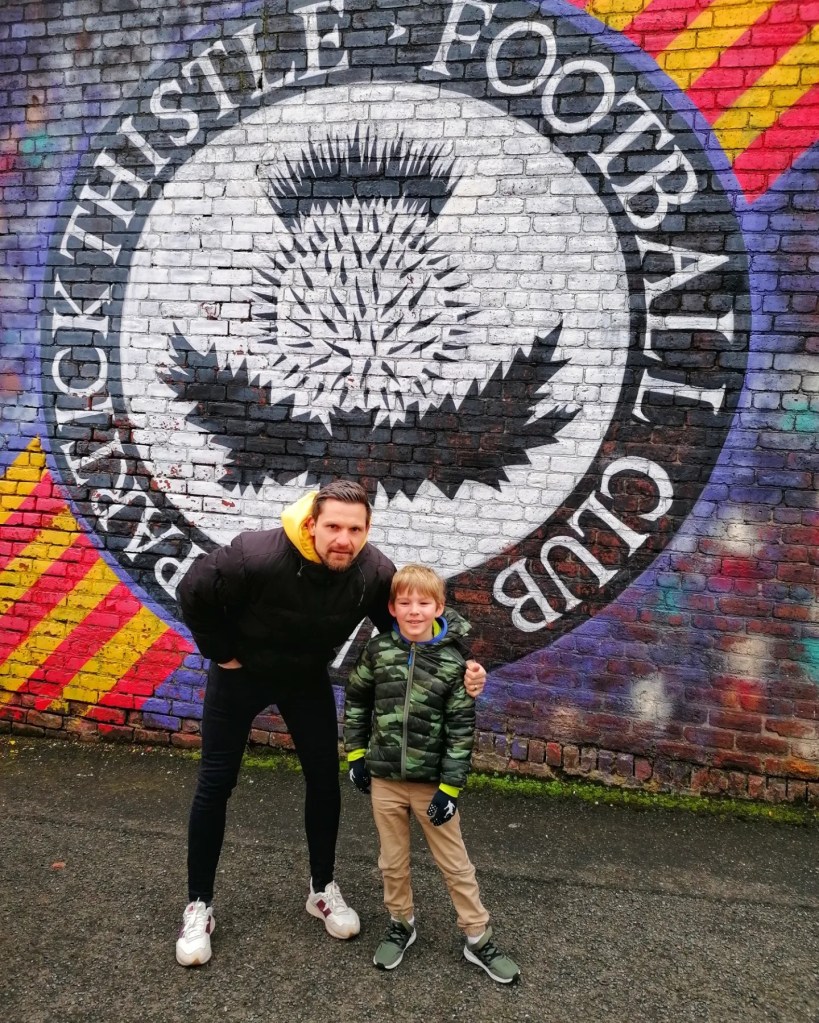
There is a line from Return to Firhill Road that resonates with me a lot:
I’ll return to Firhill Road
till the last day I am breathing,
the place I’ll always call my home,
even when the rain is falling.
I love that line.
Because it feels honest.
It does not pretend football is always easy. It does not pretend the sun is always shining. It does not ignore the rain, the hard days, the disappointments, or the pain.
But it still says: this place matters.
That is how I feel about Partick Thistle.
Football moves you on, but it does not erase where you have been.
Partick Thistle was not just a club I played for.
It was a club full of people who made me feel part of something.
And that is why, whatever happened on the pitch, whatever pain came at the end, I will always look back with warmth.
People make football clubs. People make Glasgow.
And people make Partick Thistle.
What Stayed With Me
What stayed with me from Partick Thistle is not only the football.
It is the people.
Macca. Fiona. Ricky. Robert. The staff. The players. The supporters. The people I still know by name. The people who made Firhill feel like more than a workplace.
They made the club personal.
That can bring pressure.
But it also brings meaning.
And meaning is what makes football special.
Lesson for Goalkeepers
As a goalkeeper, you must learn to deal with pressure.
But you also need to understand where pressure comes from.
Sometimes it comes from the crowd. Sometimes it comes from the score. Sometimes it comes from your own expectations. And sometimes it comes because you care deeply about the people around you.
That is not weakness.
It means you are human.
The challenge is to care – but still stay clear.
Care about the club. Care about your teammates. Care about the people behind the scenes. But when the ball is in play, bring your focus back to the simple things.
Your position.
Your communication.
Your breathing.
Your next action.
You cannot carry everyone’s emotions into the goal with you.
You can only do your job, one moment at a time.
Lesson for My Children
People matter.
Wherever you go in life, remember the people who help you, support you, make you feel welcome, and care about something bigger than themselves.
Jobs change. Schools change. Teams change. Results come and go.
But people stay in your memory.
So treat people well.
Notice the ones who quietly do things for others.
And when you become part of a team, a school, a club, or a community, understand that it is not only about you.
It is about the people around you.
That is what makes a place feel like home.
Return to Firhill Road. I will be back.

